
Residential Care Home for the Elderly: Types and Subsidies
SilverGuard Technologies LimitedUpdated 9 min read
A residential care home for the elderly in Hong Kong is licensed under Cap. 459 and provides one of three care levels: home for the aged, care and attention, or nursing home places. Homes are run as subvented, contract, non-profit self-financing or private, and only subsidised places reached through the Central Waiting List carry a fixed fee.
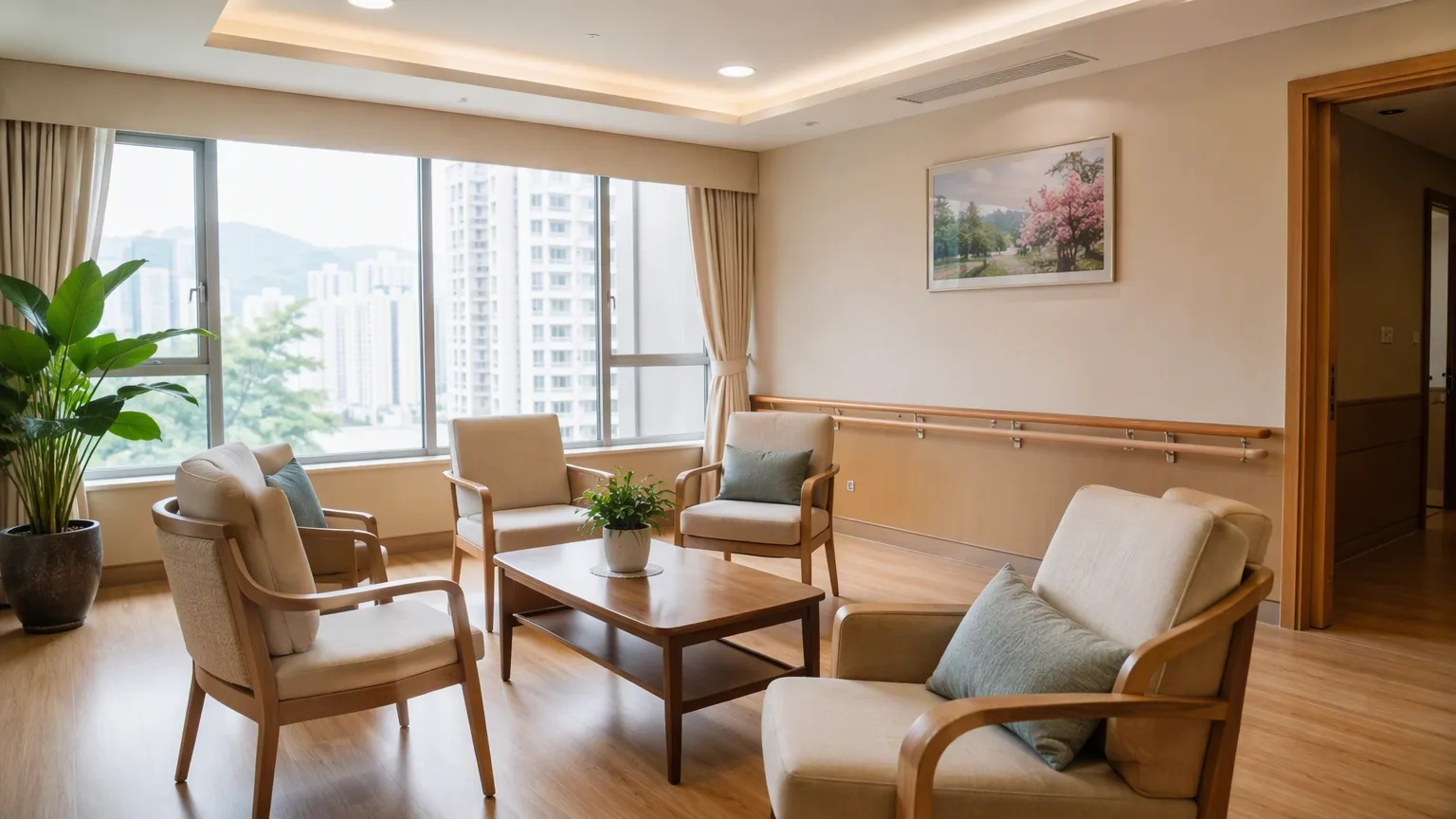
What counts as a residential care home for the elderly
Residential care homes for the elderly in Hong Kong are operated by non-governmental organisations, non-profit-making organisations and private organisations. A home is defined by its licence rather than by its name. Under the Residential Care Homes (Elderly Persons) Ordinance (Cap. 459) and its Regulation (Cap. 459 sub. leg. A), which came into full implementation on 1 June 1996, every residential care home for the elderly must be operated with a licence, and that licence covers management and staffing, facilities and equipment, location, structure and design of the premises, building safety, fire precautions, and health and sanitation. The licensing introduction on the Social Welfare Department's elderly information website sets out the scheme.
The Residential Care Homes Legislation (Miscellaneous Amendments) Ordinance 2023 was gazetted on 16 June 2023 and the majority of it took effect on 16 June 2024, while the requirements on staffing and the area of floor space per resident are being implemented in phases. A family comparing homes is therefore comparing premises licensed to a standard that is still tightening.
The three care levels, and the care each one covers
Places in Hong Kong care homes are classified into three care levels, and the level follows assessed need rather than what a family would prefer. The three levels are home for the aged places, care and attention places, and nursing home places. The elderly information website's page on types of places groups homes by the level they provide.
A care and attention home for the elderly provides residential care, meals, personal care and limited nursing care for older people who are in poor health or have physical or mild mental disabilities with a deficiency in the activities of daily living. A nursing home provides residential care, meals, personal care and regular basic medical and nursing care for older people whose condition means they cannot adequately be taken care of in a care and attention home, yet who do not need the intensive medical and nursing care provided in an infirmary. Both definitions are the Department's own wording, and both routes require an applicant aged 65 or above to be assessed as suitable and to be mentally suitable for communal living, with applicants aged between 60 and 64 admitted where there is a proven need.
One feature is worth knowing because it affects the arithmetic later. To promote a continuum of care, some care and attention places have been converted or upgraded so that a resident whose condition deteriorates can stay in the same home, and those places carry their own monthly fee.
The four operating types of care home
Separately from the care level, homes are classified by operating model into four types: subvented homes, contract homes, non-profit-making self-financing homes and private homes, as the elderly information website's page on home types sets out. The two classifications do not line up, and that is most of the difficulty in comparing two homes. A private home can hold places at nursing home level, and a subvented home can hold a subsidised place and a non-subsidised place in the same building.
Subvented homes are run by non-governmental organisations and receive subvention. Contract homes are operated by organisations selected by the Social Welfare Department through competitive bidding, a method it has used since 2001, and in general they provide both subsidised and non-subsidised places. Non-profit-making self-financing homes and private homes are funded by the fees they charge, and their places remain non-subsidised unless they join one of the purchase schemes.
Which places carry a subsidy, and which do not
Subsidised residential care places for the elderly are provided by subvented homes, by contract homes, by private homes participating in the Enhanced Bought Place Scheme, by self-financing homes participating in the Nursing Home Place Purchase Scheme, and by residential care homes in Guangdong participating in the Residential Care Services Scheme in Guangdong. The Department's introduction to residential care services lists those five routes.
Non-subsidised places are provided by contract homes, self-financing homes, private homes and some subvented homes. The distinction matters more than the building does, because the same home can offer a subsidised place reached through the Central Waiting List and a non-subsidised place reached by asking the home directly, at different monthly fees and with different staffing around them.
The categories compared
The table below sets the routes side by side. The fees are the amounts published on the Social Welfare Department's pages when this note was written, and fees are reviewed, so each figure should be confirmed with the home and with the Department.
| Category | Funding | Who runs it | Typical monthly fee | Waiting route |
|---|---|---|---|---|
| Subvented care and attention home place | Subsidised | Non-governmental organisation | $1,660 for a resident who is not a Disability Allowance recipient, $1,871 for a Disability Allowance recipient, $2,060 in a place converted to a continuum of care | Central Waiting List, after assessment |
| Subvented nursing home place | Subsidised | Non-governmental organisation | $2,054 | Central Waiting List, after assessment |
| Contract home subsidised place | Subsidised | Operator selected by the Department through competitive bidding | $2,060 | Central Waiting List, after assessment |
| Private home place under the Enhanced Bought Place Scheme | Subsidised | Private operator meeting enhanced staffing and floor space requirements | $1,763 for an EA1 place | Central Waiting List, after assessment, and reported separately in the Department's monthly statistics |
| Self-financing nursing home place under the Nursing Home Place Purchase Scheme | Subsidised | Non-profit-making self-financing home | Not published on the scheme page | Central Waiting List, with the same eligibility as nursing homes |
| Non-subsidised place in a private, self-financing or contract home, or in some subvented homes | Not subsidised | The operator of that home | Set by the home, and the Department directs enquiries to the home | Arranged directly with the home |
| Place in a Guangdong home under the Residential Care Services Scheme in Guangdong | Subsidised | A recognised operator in Guangdong | See the scheme page | Central Waiting List route |
Read the table as two questions rather than one. The first is which funding route is open to the person, and that depends on the assessment and on the Central Waiting List. The second is what the route costs each month, which for a subsidised place is a fixed figure published by the Department rather than the home's own price.
What a family actually pays
For a subsidised place the monthly fee is a fixed amount and the Department publishes it. The subvented care and attention rates differ according to whether the resident receives Disability Allowance, and the higher $2,060 rate applies to a place converted or upgraded to provide a continuum of care. A subsidised nursing home place is $2,054, a subsidised place in a contract home is $2,060, and an EA1 place bought from a private home under the Enhanced Bought Place Scheme is $1,763. Those are the figures published on the Department's pages at the time of writing, and because they are reviewed, a family should treat them as the starting point for a call rather than a settled price.
For a non-subsidised place the Department does not publish a figure at all. Its page on contract homes states that fee charging details for non-subsidised places should be enquired from the individual home directly, and the elderly information website publishes each recognised service provider's own fee table. A family comparing two private homes is therefore comparing two documents, and both should be requested in writing, with enhanced or value-added services listed separately from the basic monthly charge.
How a subsidy sits alongside a resident's own assets, and how the amounts interact with a means-tested allowance, are questions for the Department and for a qualified adviser. They are not questions this page can answer.
How the waiting works: assessment first, then the Central Waiting List
A subsidised place cannot be applied for directly. The Central Waiting List accepts requests for long term care services only on a referral basis, and the Department's page on the assessment mechanism and the Central Waiting List describes five steps: the elderly person or the family raises a request with a responsible or referring worker at a Medical Social Services Unit, an Integrated Family Service Centre or an elderly service unit; the worker screens the case and refers it for assessment; an assessor carries out the assessment through a home visit and a face-to-face interview; the worker explains the assessment result and the service matched; and a care plan is drawn up and the application is waitlisted.
The assessment is the Standardised Care Need Assessment Mechanism for Elderly Services, administered through five Standardised Care Need Assessment Management Offices covering Hong Kong, East Kowloon, West Kowloon, New Territories East and New Territories West. Subsidised residential care is aimed at people aged 65 or above who, for personal, social, health or other reasons, cannot adequately be taken care of at home, and people aged between 60 and 64 may apply where there is a proven need.
A care level sits at the end of that assessment, and where a person is assessed and recommended for community care instead, admission to community care services makes the residential application inactive. An applicant may also ask to have the application treated as inactive, and a re-activated application keeps its original application date subject to a valid assessment result.
How long the wait is, and the voucher route alongside it
The Department publishes the waiting position every month in a standard release, and its residential care statistics page links the latest figures on applicants, waiting time and the turn for a placement offer. As at 31 August 2026 the release recorded 19,247 applicants waitlisted for subsidised residential care services, of whom 17,456 were waiting for care and attention places and 1,791 for nursing home places, and the average waiting time over the preceding three months was 21 months for care and attention places in subvented homes and contract homes, 6 months for care and attention places in private homes under the Enhanced Bought Place Scheme, 12 months overall, and 8 months for nursing home places.
Two qualifications belong with those numbers. The average is calculated from normal cases admitted in the past three months, and excludes cases given priority in allocation, cases with an inactive history and transfers within the same home, because their waiting times would distort it. The release also reports applications whose status is inactive, which were 38,459 at the end of August 2026 and are not called for admission. A position on the list is a starting point for reading the figures, not a single number that means the same thing for every family.
The Residential Care Service Voucher Scheme is the alternative route for a person already in that queue, and it is the subject of a separate note on this site. It works on the money-following-the-user principle and is open to elderly persons who have been assessed and recommended for residential care services and are waitlisted for a care and attention place or a nursing home place on the Central Waiting List. The Department invites eligible people by letter in batches in order of their waiting-list application date, and says that in general it needs around eight weeks to process an application when the documents are in order. With effect from 1 April 2026 the voucher value is $17,015 a month for a care and attention place and $21,982 a month for a nursing home place, and each applicant undergoes an individual means test on assets and income that determines the level of co-payment. The Scheme's page carries the voucher values and the co-payment tables.
What differs in staffing and facilities between categories
Staffing and floor space are where the categories visibly separate. A private home that joins the Enhanced Bought Place Scheme must meet service requirements the Department sets on both. For an EA1 place the required area of floor space per resident is 9.5 square metres, and for a private home providing 100 care and attention places the staffing requirement is one home manager, five registered or enrolled nurses, one physiotherapist or occupational therapist, four health workers, 20 care workers and 11 ancillary workers, 42 staff in total including substitute employees. The Department's page on those homes publishes the table.
The care levels differ in clinical input rather than in comfort. A care and attention home provides limited nursing care, while a nursing home provides regular basic medical and nursing care. A resident whose health deteriorates may need to move up a level, which is why the converted continuum-of-care places exist, and why a family should ask what a home does when a resident's needs change rather than only what it does on the day of the visit.
The questions that separate two homes are usually about staff rather than about rooms: who is on duty at night, what training the care workers have completed, how a change in a resident's condition is recorded and escalated, and what the home does when it cannot fill a shift. A home that answers those plainly, and can show the record behind the answer, is telling a family more than any description of its facilities.
Explore more
- SilverGuard Insights on ageing and care in Hong Kong : the full set of our notes on care funding, care homes and safety at home.
- Our FAQ : the questions operators and families ask us most often.
- The Residential Care Service Voucher Scheme explained : the voucher route, its means test and its co-payment, in more detail.
- The Elderly Health Care Voucher Scheme : the other voucher Hong Kong families use, for private primary care.
- Talking to families when care changes : what to tell the family and when, once a placement is under discussion.
- Steadicore : the sensing platform in our own product family, for homes that need incident records behind the staffing answer.
Related notes
- Care Home Inspection Preparation in Hong Kong
Preparation for a care home inspection in Hong Kong: the licence, the Code of Practice records an inspection asks for, and the certificates behind them.
- Care home staffing ratio in Hong Kong: what the Code sets
Hong Kong care home staffing ratio: the minimum headcount the Code of Practice sets, by staff grade, home type and shift, including the night requirement.
- Residential Care Home Voucher Scheme in Hong Kong
The Hong Kong residential care home voucher scheme pays a voucher value to a home the family picks, with a co-payment set by an individual means test.