
Residential Respite Service in Hong Kong
SilverGuard Technologies LimitedUpdated 8 min read
Residential respite service in Hong Kong gives an older person a short stay in a care home so that a carer can rest. It is for people aged 60 or over, it needs a social worker's referral, and the published daily fee is HK$62 for care and attention and contract home places, and HK$72 for nursing home places.
What residential respite service is for
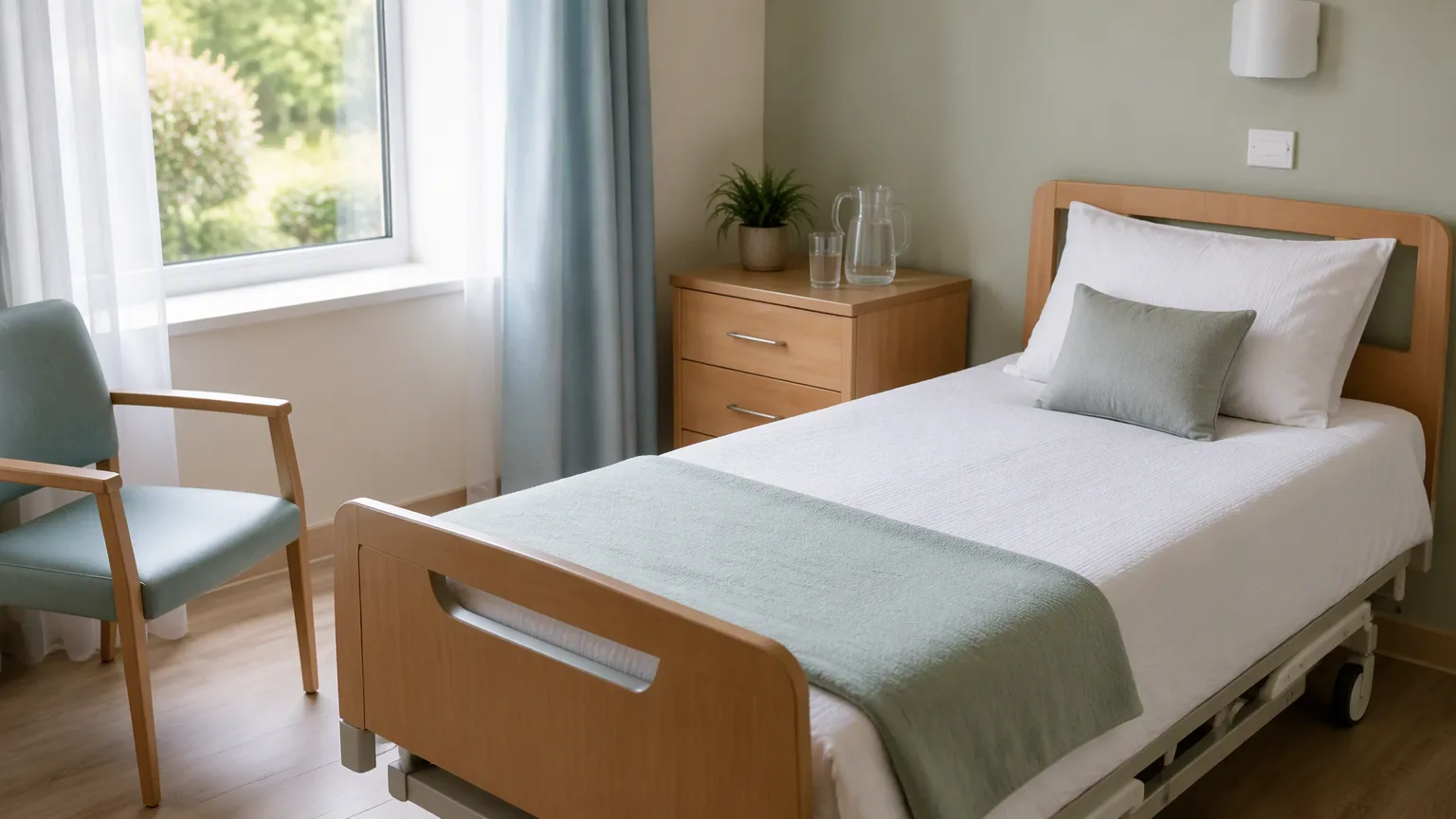
Residential respite service for the elderly is the Social Welfare Department's short stay service. An older person who lives in the community stays in a care home for a defined period while the carer rests, and the purpose behind the service is to keep community living going rather than to end it. The department's residential respite page describes it as a form of temporary or short term residential care service for elderly persons, allowing their carers to take a break and relieve their caring stress.
The published charges are modest and sit in a short table on the same page: care and attention places and contract home places at $62 per day, and nursing home places at $72 per day. The department's respite services leaflet dated December 2021 carries the same three figures and adds the caveat that the rate depends on the type of service and may be revised annually, so the figure to quote to a family is the one on the current page rather than a number from a previous year.
Who the service accepts, and the assessment it does not require
Two conditions are stated on the residential respite page: the person must be aged 60 or above, and must be physically and mentally fit for communal living. The page is explicit that applicants are not required to undergo assessment under the Standardised Care Need Assessment Mechanism for Elderly Services, which is the assessment that a permanent subsidised place depends on. What the department does expect is that the level of care required falls within the nature and scope of the home type concerned.
The leaflet states the same criteria in fuller language: a need for general personal care, or limited nursing care, or both; suitability for communal living, such as the absence of aggressive or violent behaviour; and no contagious disease. Nothing in the scheme requires the older person to give up the home they live in, and the department repeats on the day respite page that there is no restriction on the district in which an applicant lives.
The referral route, and the number a carer should call
For residential respite the route is fixed. The department states that referrals for admission to residential respite service must be made by a social worker. A family with no social worker in place can reach one through Carer Hotline 182 183, or approach a casework service unit such as an Integrated Family Service Centre or a Medical Social Services Unit, or an elderly service unit such as a District Elderly Community Centre, a Neighbourhood Elderly Centre, an Integrated Home Care Services Team or an Enhanced Home and Community Care Services Team. The Social Welfare Department hotline is 2343 2255.
One exception is worth knowing because it operates when everything else has closed. The leaflet states that where there is an urgent service need during non office hours, the family may approach directly the private homes under the Enhanced Bought Place Scheme that provide designated residential respite places. Non office hours are defined there as Monday to Saturday from 5:00 pm to 9:00 am on the following day, and Sundays and public holidays from 9:00 am to 9:00 am on the following day.
Residential respite against day respite
The two services share a purpose and differ in almost every practical detail. The published positions are set out below. The fees are those on the residential respite page and the day respite page, and both note that the rate may be adjusted annually. The limits on length of use come from the department's Operational Guideline on Residential Respite Service, dated March 2026, and its Operational Guidelines on Day Respite Service for the Elderly, dated December 2025.
| Service | Who it suits | How it is arranged | Published fee | Limit on length of use |
|---|---|---|---|---|
| Residential respite, care and attention place | An older person who needs general personal care or limited nursing care and is fit for communal living | A social worker must refer, through Carer Hotline 182 183 or a casework or elderly service unit | $62 per day | Not less than 24 hours and not more than 6 weeks on each occasion, with a cumulative maximum of 42 days within the 12 months before admission |
| Residential respite, nursing home place | An older person whose care needs fall within the scope of a nursing home | The same referral route | $72 per day | The same limits as a care and attention place |
| Day respite at a subsidised day care centre or unit | An older person who needs short term day care and is not receiving residential care services | A direct application to the centre or unit, a referral through a casework or elderly service unit, or Carer Hotline 182 183 | $41.5 per day, with any part of a day counted as one full day | A cumulative maximum of 42 days within the preceding 12 months, which may be split into separate periods |
| Day respite at a Community Care Service Voucher recognised service provider | The same group, at a provider taking part in the voucher scheme | The same three routes, and a booking may be made up to one month before the intended date of service | $21 per five hour session, with any period of less than five hours counted as one full session | The same cumulative maximum of 42 days |
The choice between the two is usually made by the family's circumstances rather than by preference. Day respite keeps the person at home overnight, which suits a carer who needs daytime hours rather than a full night of sleep. Residential respite is the version that covers a hospital stay, a trip away or the carer's own illness.
How long a stay can be, and how an extension is decided
The Operational Guideline on Residential Respite Service dated March 2026 puts firm edges on a residential stay. Each occasion is neither less than 24 hours nor more than 6 weeks, and that 6 weeks is also the maximum accumulative duration of repeated use within the 12 months before the date of admission. Where a person applies repeatedly, the referring social worker is expected to check whether the past 12 months have already reached the maximum accumulative duration of 42 days.
An extension is possible, but it is not a family decision and not a charge to be negotiated at the counter. Under the guideline, in very special circumstances the referring social worker may apply on the older person's behalf for an extension of the maximum period, having provided sufficient grounds and a viable welfare plan, after close monitoring of the case and consultation with the superintendent of the home concerned and the Planning and Co-ordinating Team of the district. For day respite, the Operational Guidelines on Day Respite Service for the Elderly dated December 2025 state that a person may use a cumulative maximum of 42 days within the preceding 12 months, which may be split into separate periods, and that where an extension is needed the service unit consults the department for discretionary consideration.
One document follows every stay. The residential guideline states that family members are required to sign an undertaking to take the older person back for care at the end of the respite period. That undertaking is what keeps respite a short term service and keeps the place available for the next carer.
Finding a vacancy in the same week
Vacancies are published rather than negotiated in private. The department runs the Vacancy Enquiry System for Respite Services and Emergency Placement, which shows the vacancy position of designated residential respite places in subvented care and attention homes, contract homes and private homes taking part in the Enhanced Bought Place Scheme. The March 2026 guideline requires service units to update their vacancy information on the system within one working day, which is what makes the system worth checking before a family starts telephoning homes.
Day respite widened at the end of 2024. In a press release dated 1 December 2024 the department announced that more than 110 recognised service providers under the Community Care Service Voucher Scheme had begun to provide day respite for the elderly, taking the number of day respite service points across the districts from about 190 to more than 300. The announcement repeated the three entry routes: call Carer Hotline 182 183 and have a social worker match the service, apply to the unit directly, or come through a referral.
The department also publishes dated lists of the homes that provide designated respite places, and of casual vacancy positions in the Enhanced Bought Place Scheme. A family should work from the current dated list rather than a copy saved during a previous search, because the list of participating homes changes.
What the home needs before a respite resident arrives
A respite admission carries a health check. The March 2026 guideline states that, under the Code of Practice for Residential Care Homes (Elderly Persons), applicants are required to undergo a medical examination conducted by a registered medical practitioner, using the Medical Examination Form for Residents in Residential Care Homes for the Elderly, before admission. In urgent or special circumstances where that cannot be done beforehand, the examination may be conducted within three days after admission. The form is valid for six months from the date of issue.
The guideline also limits what a home may ask for. Service units should not require additional examinations such as chest X-rays beyond the basic medical examination, and justification plus prior approval from the department is required if additional examinations are considered necessary. Homes are expected to use the applicant's medical records, including those in the Electronic Health Record Sharing System, and where feasible to use them as a substitute for further examinations. No deposit and no payment in lieu of notice of service withdrawal is required for either residential or day respite.
Day respite is lighter still. The December 2025 guideline states that no medical examination is required for day respite provided by subsidised day care centres or units, or by recognised service providers under the voucher scheme. A private home under the Enhanced Bought Place Scheme does need the medical examination completed, but where an applicant cannot complete it beforehand the home should provide the service first and arrange the examination within three calendar days.
What the daily fee covers, and what may be charged separately
The daily fee buys more than a bed. The footnotes to both operational guidelines state that the service fee already covers basic care and nursing services for the elderly, including meal services (breakfast, lunch, dinner and snacks), rehabilitation exercises, personal and nursing care, and all incidental items and services provided as appropriate.
A home may charge separately for additional services, care items or consumables needed to meet a resident's special personal care needs, and the same footnotes set the boundary around that. Such charges should not include the general services and basic facilities provided under the respite service, and the home must state all charge items and their details clearly, so that the service user and carer, the caseworker, the department and the public can see the arrangement and the resident can make an informed choice about buying anything extra.
Day respite at a recognised service provider under the voucher scheme is priced by session rather than by day. The December 2025 guideline states that each session lasts five hours and that any period of less than five hours counts as one full session, which is the detail to check when a family is comparing an afternoon a week against a full day.
When respite turns into a decision about a permanent place
The guidelines are careful to say that residential respite service is not a long term care service, and the route to a permanent subsidised place is a separate one. That route begins with the Standardised Care Need Assessment Mechanism for Elderly Services and the Central Waiting List, which accepts requests only on a referral from a Medical Social Services Unit, an Integrated Family Service Centre or an elderly service unit, and carries out the assessment through a home visit and a face to face interview.
The separation is useful rather than discouraging. A respite stay is the least expensive way for a family to find out whether a particular home suits the person, whether the food and the daily routine work, and whether the staff can handle the care needs involved, and what the family learns changes what it asks for at the next assessment. Two articles on this site cover where that decision can lead: private care home fees and what a contract should state, and the Community Care Service Voucher Scheme, which funds care at home rather than a bed. How a family talks through the decision over time is dealt with in family communication in a care home.
Nothing in this article is legal or financial advice, and no article can decide an individual case. For the position that applies to one person, on eligibility, on the fee, or on a vacancy this week, the decision makers are the ones named above: the referring social worker, Carer Hotline 182 183 and the Social Welfare Department hotline 2343 2255.
Explore more
- SilverGuard Insights on aged care : our other notes on Hong Kong care homes, staffing and monitoring.
- Community Care Service Voucher Scheme : the route that funds care at home, which day respite can also use.
- Private care home fees and the contract : what a permanent placement costs beyond the respite daily fee.
- Family communication in a care home : how families talk through the move from respite to a longer stay.
- Our FAQ : deployment, alerting and privacy questions we are asked most often.
- Steadicore : our sister brand for stability and mobility products.
Related notes
- Residential Care Home for the Elderly: Types and Subsidies
Residential care homes for the elderly in Hong Kong fall into four operating types and three care levels, and only some places are subsidised.
- Residential Care Home Voucher Scheme in Hong Kong
The Hong Kong residential care home voucher scheme pays a voucher value to a home the family picks, with a co-payment set by an individual means test.
- Community Care Service Voucher Scheme in Hong Kong
The Hong Kong community care service voucher scheme pays a monthly value from HK$4,526 to HK$10,824 for 2026-27, with six co-payment levels.