
Care Home Infection Control in Hong Kong
SilverGuard Technologies LimitedUpdated 8 min read
Care home infection control in Hong Kong follows chapter 13 of the Code of Practice for Residential Care Homes (Elderly Persons) and the Centre for Health Protection guideline for elderly homes: a named Infection Control Officer, hand hygiene at five moments, a designated isolation room, separated cleaning and laundry, staff vaccination, visitor rules and immediate reporting of an outbreak.
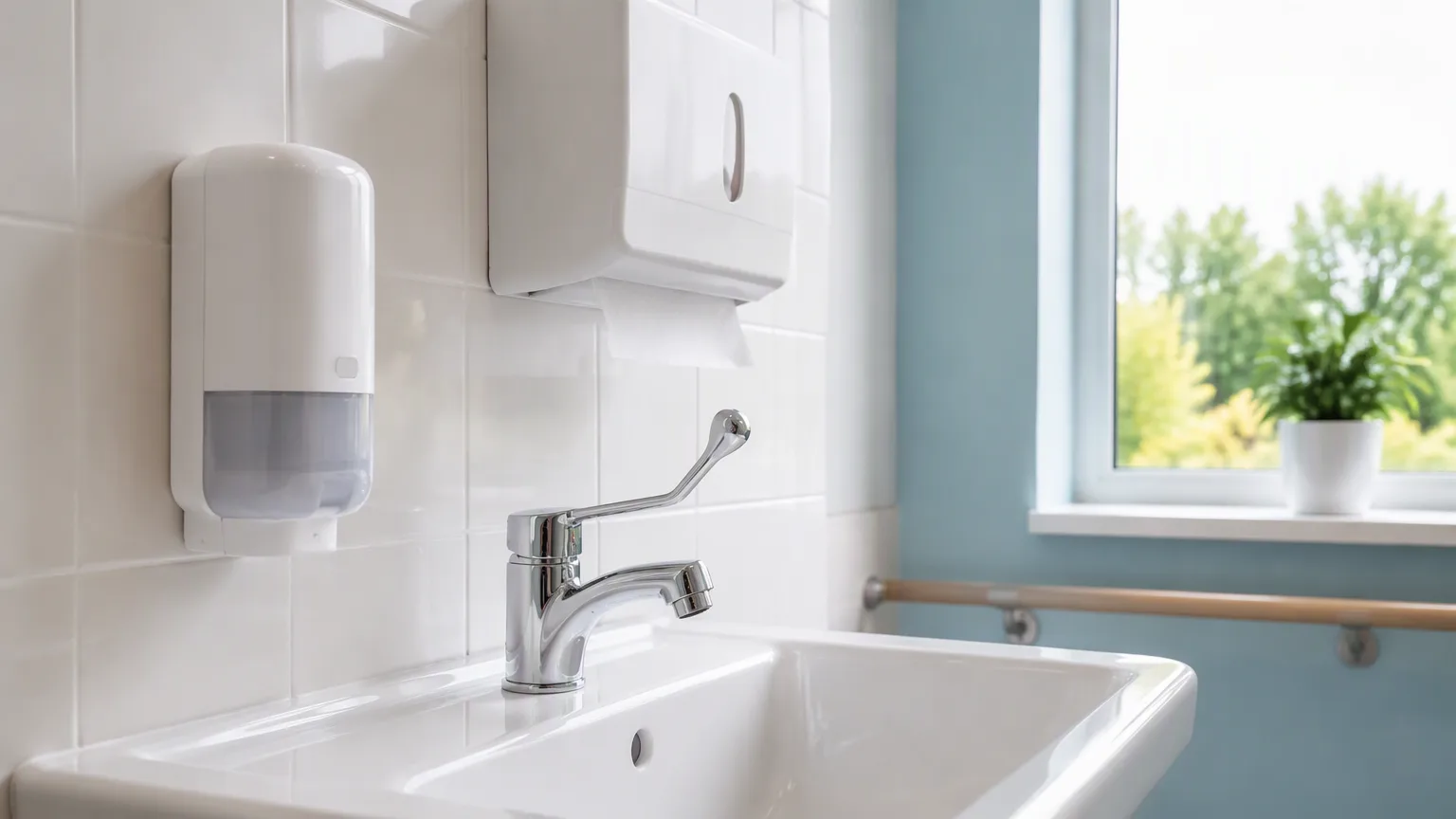
What the written infection control policy has to cover
The requirement is not a folder of posters. Chapter 13 of the Code of Practice for Residential Care Homes (Elderly Persons), June 2024 (Revised Edition), opens by stating that residents, staff and visitors may be exposed to pathogens during daily activities or care processes, and that a home should therefore implement effective infection control measures [Code of Practice 13.1].
The first duty is a person rather than a document. The home manager shall appoint either a nurse or a health worker as the Infection Control Officer, and in a self-care hostel the home manager or appropriate staff who have received infection control training [Code of Practice 13.2]. The officer coordinates infection control and reviews the strategy, identifies signs of infection and assesses outbreak risk, reports confirmed and suspected cases to the Licensing Office of Residential Care Homes for the Elderly and to the Centre for Health Protection, supervises cleaning and disinfection and the handling of soiled linen and waste, disseminates updated guidance, arranges staff training, and oversees personal, environmental and food hygiene [Code of Practice 13.2.1 to 13.2.8]. The Code also requires that officer to receive infection control training regularly, so the appointment, the named person and the training record are the first three things a visiting health team or an inspector asks for.
The second duty is the reference the policy is written against. The Code directs the home to the Guidelines on Prevention of Communicable Diseases in Residential Care Homes for the Elderly issued by the Centre for Health Protection and requires it to implement infection control measures with reference to that document [Code of Practice 13.5]. The copy published at chp.gov.hk is the fourth edition, and its editorial board is dated September 2025, which is later than this article's first publication date in June 2025; the content cited here is the standard precautions and transmission-based precautions framework in the current edition.
Hand hygiene: the moments, and the facilities behind them
The Centre for Health Protection sets out five moments for staff: before touching a resident; before a clean or aseptic procedure such as nasogastric tube feeding or a dressing change; after any risk of exposure to blood, body fluid, secretion, excreta, a wound or a mucous membrane, for example after changing a diaper; after touching a resident; and after touching contaminated items or a resident's surrounding environment. Staff are also asked to perform hand hygiene before and after touching the eyes, nose and mouth, before handling or eating food, before taking medication, after using the toilet, after coughing or sneezing, after touching public installations such as lift buttons or door handles, and after contact with animals or poultry, and to encourage residents to do the same.
The Code of Practice states the same duty in its own terms. A home should provide hand hygiene facilities, including wash basins, liquid soap, hand-drying facilities and alcohol-based handrub, at appropriate locations so that staff, residents and visitors can perform hand hygiene [Code of Practice 13.5.2(a)]. Chapter 15 names the four moments staff must wash their hands thoroughly with liquid soap or disinfect with alcohol-based handrub: before preparing food or feeding; before and after providing personal care or nursing care to a resident; between taking care of different residents; and after handling vomitus or faeces and changing diapers [Code of Practice 15.3.2(d)].
Two details decide whether this is a habit or a file. Gloves are not a substitute for hand hygiene, and hand hygiene is required both before putting gloves on and after taking them off. A staff member with a bleeding or discharging wound, diarrhoea, vomiting or an infectious disease should receive treatment and stop handling food or rendering personal or nursing care, and where that person is given other ancillary duties, appropriate protective equipment is used [Code of Practice 15.3.2(c)].
Isolation and cohorting when a resident is infected
Isolation is a physical requirement before it is a procedure. A home shall be provided with a designated isolation room for every 50 beds, equipped with basic bedroom furniture, electric call bells, hand hygiene facilities, good ventilation, enough space for donning and doffing protective equipment, and equipment for discarding contaminated articles, and the home must ensure that the designated room or rooms are always ready to be used [Code of Practice 13.4.1]. The note to that paragraph states the floor: at least one designated isolation room in every home; an additional isolation room or facility for each extra 50 beds or part of that figure; and for a home of 200 beds or above, four isolation rooms or facilities, of which at least one is the designated room.
The equipment behind isolation is listed rather than left to judgement: protective equipment in sufficient quantity for staff and visitors, including masks, disposable gloves, protective gowns, caps and goggles or face shields, plus an electric call bell, a water basin, a hand-drying facility and a lidded litter bin for each isolation room [Code of Practice 7.10]. A home that has converted a bed space with a curtain has an isolation room on paper and not in practice.
Cohorting is the answer to the case where several residents or staff are affected at once. During an outbreak, the Centre for Health Protection asks the home to minimise contact between residents and staff of different floors and to arrange, when preparing the shift roster, for the same team to take care of a fixed group of residents. Residents who fall sick should avoid group activities, and in a respiratory outbreak residents who are not admitted to hospital should wear surgical masks and be relocated to the same designated area or room for isolation. Cleaning tools should be labelled for designated areas such as the kitchen, toilets, general areas and the isolation room or cohort areas [CHP 3.2.1.4, 5.4 and 5.6.1].
Cleaning, disinfection and laundry: the dilution is part of the record
The Code of Practice requires the home to draw up and implement an effective cleaning schedule and to clean or disinfect immediately whenever necessary [Code of Practice 15.2]. Floors should be cleaned daily and disinfected as necessary with 1 in 99 diluted household bleach, especially in toilets, bathrooms, kitchens and isolation rooms; bed sheets and pillow cases should be washed and changed once a week and changed and disinfected immediately when necessary; kitchens, cooking utensils and food containers should be cleaned promptly after each food preparation; garbage receptacles should be cleaned regularly and covered at all times [Code of Practice 15.2.1 to 15.2.5].
The Centre for Health Protection guideline supplies the concentrations that go with each situation: 1 in 99 diluted household bleach for routine cleaning of frequently touched surfaces, 1 in 49 where a surface is contaminated by vomitus, excreta or secretions and during an outbreak, and 1 in 4 where there is a large amount of blood, left for 10 minutes and then rinsed and dried. Household bleach should not be used on metal surfaces because sodium hypochlorite corrodes them, and 70% alcohol is used where a metal surface needs disinfection.
Laundry is where cross-infection is easiest to miss. All linen should be washed thoroughly after use, handled with gloves, a surgical mask and where appropriate a gown or apron, and handled with care to avoid agitation. Soiled linen should be handled separately: solid and bulky waste is removed first, the linen is immersed in 1 in 49 diluted household bleach for 30 minutes, and only then does routine laundering begin, using a hot water cycle of at least 65 degrees Celsius where available, or drying at that temperature where there is no hot water machine, or a bleach soak before laundering where neither is available. Clean linen is sorted in a clean area. Clinical waste is separated from ordinary waste and packed in the specified colour-coded containers, and the Code requires compliance with the Waste Disposal Ordinance (Cap. 354) and the Waste Disposal (Clinical Waste) (General) Regulation [CHP 4.1.6 and 4.1.7; Code of Practice 13.5.2(f)].
Food handling, and the staff who must not be in the kitchen
Food safety in a care home is written as kitchen rules rather than as a policy statement. Raw food and cooked food should be stored separately and all food should be covered; the temperature of the refrigerator and freezer should be checked constantly to keep them at 4 degrees Celsius or below and minus 18 degrees Celsius or below respectively; frozen meat and fish should be thawed completely before cooking and never at room temperature; defrosted food should not be refrozen; separate knives, cutting boards and utensils should be used for raw and cooked food; reheated cooked food should be reheated thoroughly; the use of unlicensed food suppliers is prohibited and the expiry date on a package should be observed before the food is used [Code of Practice 14.5.1 to 14.5.5].
The exclusion rule matters more than any of them. Any staff member suffering from a bleeding or discharging wound, diarrhoea, vomiting or an infectious disease should receive treatment and stop handling food or rendering personal care or nursing care, and if that person is required to perform other ancillary duties instead, protective equipment such as a face mask and disposable gloves should be used [Code of Practice 15.3.2(c)]. The Centre for Health Protection repeats the same rule for a food handler who becomes unwell: seek treatment early and return to work only after full recovery.
The Centre for Health Protection guideline points kitchen staff at the Five Keys to Food Safety and sets out the home's part in it: storing food properly and separately, checking refrigerator and freezer temperatures daily, cleaning the kitchen and utensils after food preparation, and storing cleaned utensils and containers in a covered cabinet. None of this is recorded in the care file, which is why the kitchen's own temperature and cleaning records are the only evidence a home has that the routine happened on an ordinary Tuesday.
Vaccination, staff sickness and who stays at home
The Code of Practice asks a home to encourage and assist in arranging vaccination for residents and staff, naming the seasonal influenza vaccination provided by the Government and participation in other vaccination programmes, as the way to prevent and minimise the risk of an outbreak [Code of Practice 13.5.3]. The Centre for Health Protection states the arrangement from the other side: all staff in elderly homes are offered free seasonal influenza vaccination annually through the Residential Care Home Vaccination Programme, and operators or home managers should encourage staff to receive it. Eligible residents are offered the same vaccination each year, together with one dose of the 15-valent pneumococcal conjugate vaccine and one dose of the 23-valent pneumococcal polysaccharide vaccine.
Some vaccination information has to be in the record rather than in a staff briefing. The June 2024 (Revised Edition) of the Code requires the home to keep information on residents' COVID-19 vaccination in their medical records, including the Medical Examination Form for Residents in Residential Care Homes for the Elderly and the Personal Health and Nursing Record, and to retain it for inspection by licensing officers [Code of Practice 13.5.4(c)]. The same edition sets admission requirements for that vaccination, which is a requirement a home should read in the current edition of the Code rather than in an article.
Sickness among staff is handled in two documents. The Code's hygiene chapter excludes a symptomatic staff member from food handling and personal care, and the Centre for Health Protection guideline goes further during an outbreak: staff falling sick should refrain from work until fully recovered, and staff movement should be minimised, with the same group of staff caring for the same group of residents as far as possible. Infection control training for staff, which the Code requires as part of continuous on-the-job training alongside occupational safety, drug management and restraint, is where the exclusion rule is taught rather than assumed [Code of Practice 9.4.3].
Visitors: the rules that have to be given, not assumed
Visitors are treated as part of the transmission route rather than as guests outside it. The Code of Practice calls it good practice to keep a visitors' attendance record so that the Centre for Health Protection can trace the source of an infection when it needs to, to inform visitors and relatives about an outbreak, and to adjust the visiting arrangement where necessary [Code of Practice 13.6.2].
The Centre for Health Protection asks visitors to pay attention to their own health and not to visit when they have a fever or respiratory symptoms, to wear surgical masks during visits, to fill in the visiting dates and other information the home requires for follow-up by the Department of Health, to wash hands or use alcohol-based handrub before and after the visit, to maintain cough manners, and to avoid visiting altogether when an outbreak occurs or when the Department of Health advises it, using telephone contact instead [CHP 4.4].
The facilities that make those rules possible are the home's responsibility. The Centre for Health Protection asks home managers to keep tissue paper and lidded bins available for disposal, to ensure liquid soap and paper towels are consistently available near sinks and alcohol-based handrub dispensers in convenient locations, and to put up signage reminding visitors with respiratory symptoms to wear a surgical mask. A rule that a visitor cannot follow because there is no soap at the sink is not a rule.
An outbreak: who is told, what is recorded, what stops
The statutory duty is immediate and specific. Under regulation 18 of the Residential Care Homes (Elderly Persons) Regulation (Cap. 459A), if a home manager suspects or knows of a case of a scheduled infectious disease among the residents or staff of a residential care home, or suspects or knows that any such person has been in contact with a case of a scheduled infectious disease, he shall immediately report it to the Director of Social Welfare [Code of Practice 13.3.1]. Scheduled infectious diseases are those listed in Schedule 1 to the Prevention and Control of Disease Ordinance (Cap. 599) [Code of Practice 13.3.2].
Beyond the statutory list, the home reports clusters. Where several staff or residents develop similar symptoms within a short period, or are suspected to have contracted an infectious disease such as influenza or scabies, the home manager or the Infection Control Officer should report to the Licensing Office of Residential Care Homes for the Elderly and the Centre for Health Protection as soon as possible using the notification form for a suspected infectious disease outbreak in an elderly home, and where the Director of Social Welfare specifies it, report the required information including a zero case within the stated time [Code of Practice 13.3.3 and 13.3.4].
The route is now electronic. The Centre for Health Protection asks homes to notify the Central Notification Office of the Centre for Health Protection, the Licensing Office of the Social Welfare Department and, where applicable, the Community Geriatric Assessment Team of the Hospital Authority through the e-platform for infection control in residential care homes, following the notification mechanism in Appendix G of the guideline, and to send the completed notification form by fax if the platform cannot be used. The common outbreaks in elderly homes are respiratory tract infection, acute gastroenteritis and scabies.
What a home stops doing matters as much as what it reports. During a suspected outbreak the guideline asks the home to isolate the suspected resident properly, arrange early medical treatment, keep proper medical records, reinforce standard and transmission-based precautions, increase the frequency of environmental cleaning and disinfection, notify the parties above, inform relatives, guardians or guarantors, keep residents who are unwell out of group activities, keep staff who are unwell off work until fully recovered, minimise contact between residents and staff of different floors, assign the same team to a fixed group of residents, and discourage visits, with personal hygiene strictly observed where a visit is necessary [CHP 5.4].
The record then closes the loop, and it is the same list whatever the pathogen was. The infectious disease record holds five things:
Self-check: the area, the measure and the record that shows it
The table pairs each area of infection control with the measure a source states and the record that shows the home carried it out. The record column is the one to fill in before an inspection or a visit from a health team, because the measure is a description of intent until something dated exists.
| Infection control area | The measure the Code or the CHP guideline states | The record that shows it was carried out |
|---|---|---|
| Officer and written policy | A nurse or health worker appointed as Infection Control Officer, receiving infection control training regularly and reviewing the strategy | The appointment and the officer's training record |
| Hand hygiene | Facilities at appropriate locations, and hand hygiene by staff at the five moments and before and after contact with each resident | Infection control and hand hygiene modules in the staff training record |
| Isolation | At least one designated isolation room, one more facility for each additional 50 beds, equipped and always ready | The isolation room equipment list and the resident's health and nursing record |
| Cleaning and disinfection | A cleaning schedule, floors cleaned daily, 1 in 99 bleach for general areas and 1 in 49 where there is vomitus or excreta | The cleaning schedule with the date each task was carried out |
| Linen and laundry | Used linen washed after use, soiled linen soaked separately in 1 in 49 bleach for 30 minutes before laundering | The laundry record and the record of changing bed sheets and pillow cases |
| Food handling | Raw and cooked food stored separately, refrigerator at 4 degrees Celsius or below, freezer at minus 18 degrees Celsius or below, separate utensils | The kitchen's temperature and cleaning records |
| Staff vaccination and exclusion | Staff offered seasonal influenza vaccination annually, and a staff member with diarrhoea, vomiting or an infectious disease kept from food and personal care | The staff vaccination record and the sickness record |
| Visitors | Visitors advised on hand hygiene, masks and not visiting when unwell, with the visiting arrangement adjusted during an outbreak | The visitors' attendance record |
| Outbreak reporting | Immediate report of a scheduled infectious disease, and reporting of a cluster through the e-platform or the notification form | The infectious disease record, including the dates the Centre for Health Protection and the Licensing Office were notified |
A completed self-check proves nothing by itself. What it produces is a list of what is missing, the date by which each gap closes, and a named person for each line, which is the version of the file that survives a change of home manager. Where a resident's condition or an outbreak needs a clinical decision, the home's nurse or doctor, the Centre for Health Protection or the district Visiting Health Team of the Elderly Health Service is the right route rather than a general article.
- the dates and times of the onset of disease in infected residents and staff;
- the numbers and names of those infected;
- the names of the hospitals, clinics or registered medical practitioners, and the dates of treatment;
- the dates on which the Centre for Health Protection, the Licensing Office and the Hospital Authority were notified;
- the follow-up action taken by the home, kept alongside the log book and the residents' Personal Health and Nursing Records [Code of Practice 13.6.1].
Explore more
- SilverGuard Insights on care home operations : the wider archive on records, staffing and safety in residential care.
- Care home inspection preparation in Hong Kong : the licensing file, and the records an inspector asks for on the day.
- Medication management in a care home : the administration and drug records that sit beside the infection control file.
- Care home staffing ratios in Hong Kong : what the staffing tables require, and why isolation and cohorting are roster decisions.
- Our FAQ : deployment, alerting and record-keeping questions we are asked most often.
- Steadicore : our sister brand, for the building and equipment side of a care setting.
Related notes
- Care Home Inspection Preparation in Hong Kong
Preparation for a care home inspection in Hong Kong: the licence, the Code of Practice records an inspection asks for, and the certificates behind them.
- Care home staffing ratio in Hong Kong: what the Code sets
Hong Kong care home staffing ratio: the minimum headcount the Code of Practice sets, by staff grade, home type and shift, including the night requirement.
- Residential Care Home for the Elderly: Types and Subsidies
Residential care homes for the elderly in Hong Kong fall into four operating types and three care levels, and only some places are subsidised.