
Loneliness in Care Homes: What Activities Are For
SilverGuard Technologies Limited8 min read
Loneliness in care homes is a resident's own feeling of being alone, which is not the same as having few visitors. Hong Kong's Elderly Health Service links it to isolation, hearing loss and bereavement, and the Code of Practice expects social care planned for each resident, not only a timetable of group activities.
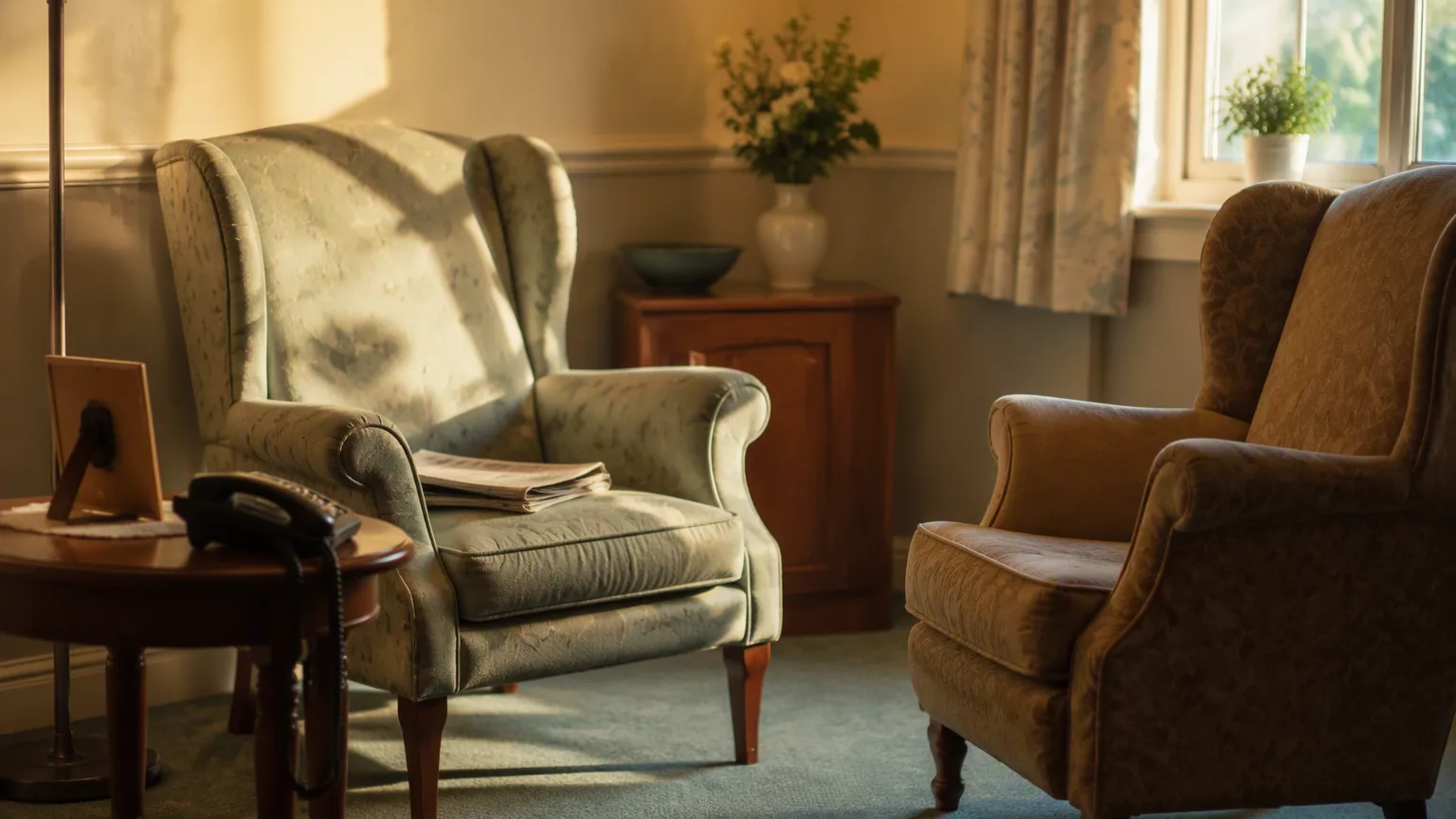
Being alone and feeling alone are two different things
The two words are used as if they meant the same thing, and the difference decides what a care home should do about either. A Legislative Council Research Office brief on elderly isolation defines social isolation as a lack of contact with family, friends or other people, and defines loneliness as the subjective feeling of being alone, regardless of the amount of social contact. The same brief notes that isolation can often lead to loneliness in some people, which is a possibility rather than a rule.
That distinction rules out the commonest mistake in a home, which is treating a full activity board as the answer to a resident's loneliness. The Elderly Health Service describes socially isolated elders as disengaged from others, and adds that even when they do interact with people, the interactions are usually superficial and they seldom build deep relationships. A resident can therefore sit in a busy day room, answer every question put to them and still be in the group the service is describing.
The health consequences of that state are recorded in the same Legislative Council brief, which states that studies have found social isolation to be as damaging to health as smoking and obesity. It records that isolation is related to an increased risk of heart disease by 29 per cent and stroke by 32 per cent, and that it is linked with higher rates of mental health problems such as depression and suicides in older age. The brief also states that in 2020 Hong Kong reported 438 suicides among people aged 60 or above, the highest number since records began in 1973, and that this group had the highest suicide rate across all age groups.
Numbers of that weight are the reason the rest of this article is about records, staffing and routines rather than about entertainment programming.
What the Elderly Health Service lists as the risk factors
The Elderly Health Service page on social isolation sorts the risk factors into five areas, and all five survive admission to a home. On the physical side it lists chronic pain such as osteoarthritis of the knees, chronic illnesses such as Parkinson's disease, functional decline including incontinence and visual or hearing impairment, and changes in appearance such as paralysis after a stroke. It adds that these problems reduce an elder's capability to go outside and also their motivation to interact with others, because of low self-esteem.
On the psychological side the page lists past hardships such as social rejection, low self-esteem, a lack of trust in others, feeling despised or abandoned and avoiding social contact or showing hostility as a result, introversion and a lack of social skills, and chronic emotional disturbance or grief after the loss of a loved one. On the family side it lists elders who give up social activities to care for family, a partner's disapproval of out-of-home activities, and a wish to avoid discussing family problems. On the environmental side it lists areas with limited public transport and buildings without lifts, and elders who have just relocated to a new neighbourhood, who are unfamiliar with local facilities and lack the motivation to meet new people. On the financial side it lists the drop in income after retirement and the consequent reduction in spending on recreation, entertainment and social gatherings.
The page then names the effects it associates with prolonged isolation. Physically it lists a more imbalanced diet and an unhealthy lifestyle, more physical illnesses and a shorter lifespan. Socially it notes that indifference or hostility drives people away, which reduces social contacts further and worsens the isolation. Psychologically it describes greater difficulty in handling daily hassles because the support network is thin, leading to a greater sense of helplessness and a higher chance of developing mood disorders such as depression and anxiety.
For a care team the useful part of that page is not the classification but the two warning signs it records: preferring to stay at home rather than meeting people, and feeling fearful or even hostile towards others. Both are observable in a corridor, without any questionnaire and without any assessment tool.
The same page lists what it says helps. It advises regular phone calls to check on the elder's well-being, extra calls when the weather changes, taking the initiative to introduce new neighbours to community facilities and events, accompanying the elder to medical appointments, helping with daily necessities and simple household repairs, sitting with them and sharing daily life as well as worries, and paying visits or making calls during major festivals so that the older person knows they are not alone.
Who is most at risk in a care home
A systematic review of hearing loss, loneliness and social isolation screened 2,495 studies and included 14. Most of the included studies were cross-sectional, and the review reports that most of the studies with multivariable adjustment found that hearing loss was associated with a higher risk of loneliness and social isolation. Several studies found that the association was stronger among women than among men.
In a home that finding looks like an aid with a flat battery, an aid left in a drawer, or a resident who has stopped asking people to repeat themselves because asking has become embarrassing. It is a loneliness risk that can be found on a walk round the bedrooms, and it is cheaper to act on than any programme on the notice board.
An integrative review on care home environments and culturally and linguistically diverse residents with dementia, published in January 2026, describes residents who move into a home where health professionals do not speak their language and where access to cultural activities is limited, and it states that this may increase loneliness and social isolation. Its findings stress communication in the resident's preferred language, bilingual staff, culturally relevant activities, and cooperation with the resident's family and cultural community.
A dialect gap works in the same way and is easy to miss in a Chinese-speaking city. Where the language spoken in the home is not the resident's preferred language, the resident can be present in every group and part of none of them, and no timetable repairs it.
The Elderly Health Service page on depression lists significant changes in life or difficulties in adjustment, including illness, retirement, changes in family or living conditions and the loss of a spouse, among the factors that can precipitate depression, and observes that people who lack social support, for example those living alone or with no relatives or friends, are prone to it. The Code of Practice treats the same period as its own: paragraph 16.3.1 requires the home to introduce a resident to its environment, staff, daily routine and activity arrangements as early as possible and to pay more attention to the resident's adaptability to group living, particularly during the initial period after admission, while paragraph 16.3.2 asks the home to encourage family members to visit more frequently during that same period.
No visitors is the risk factor that is easiest to see and hardest to fix, and it is the one a home can only partly control. A resident whose family is absent, distant or simply not named in the record is the resident most likely to be described at handover as a set of tasks. The service's practical advice for isolated elders assumes a caller; where no relative is making the call, the home has to decide who is.
Dementia adds a further layer, and the Code handles it in a separate chapter. Paragraph 12.9.1 requires a home to consult healthcare professionals and relevant professional practitioners for advice and to take appropriate measures in providing care and protection to residents with dementia, and paragraph 12.9.3 requires staff training to strengthen their skills in that care. A resident who has lost track of time and place also loses the shared references that ordinary conversation depends on, which makes familiarity and continuity of staff part of the answer rather than a nicety.
What the Code of Practice requires a home to provide
Chapter 16 of the Code of Practice for Residential Care Homes (Elderly Persons) states at paragraph 16.1 that homes should encourage residents to keep a healthy lifestyle and should provide diverse social, leisure and recreational programmes so that residents can maintain physical, mental and psychological health. Paragraph 16.2 defines part of a homely atmosphere as staff being familiar with residents' living habits and personal preferences, and staff facilitating communication among residents.
Social care is also supposed to be written into each resident's individual care plan. Paragraph 12.3.2 requires the plan to be formulated jointly with the resident and their guardians, guarantors, family members or relatives within one month after admission, and to be reviewed six months after the first plan and then at least annually or whenever the required care services change. Paragraph 12.3.3 lists what the plan contains, including the resident's mental state and their personal habits and daily activities, which the paragraph describes in terms of social, emotional and behavioural conditions.
For the programme itself, paragraph 8.5 requires a routine programme schedule and timetable for daily activities, posted in conspicuous places such as the reception area, a notice board or a common area for visitors. Paragraph 16.4 then sets out what the activities should be: individual leisure activities such as drawing or music, chosen for the resident's character and ability, or therapeutic activities based on needs and professional advice; interest groups such as Cantonese opera, handicraft and reading or newspaper reading, and therapeutic groups, arranged to encourage cooperation and interaction; regular large-scale events such as birthday parties and festivals; the use of community resources, including volunteer visits, outdoor activities and neighbourhood programmes, so that residents keep a connection with the community; educational talks or gatherings for relatives, so that residents and their families interact more; and activity information displayed on notice boards, with the records of activities properly kept.
Those last words are the operator's opening, and also the trap. The Code requires records of activities, not a record of who stopped feeling alone, and the two are not the same document. A home that can produce attendance lists and cannot produce a single dated change in a care plan has satisfied the paragraph and missed its purpose.
How a home can see loneliness without running a survey
Nothing in the Code requires a loneliness questionnaire, and no screening tool is presented in this article as a diagnosis. The evidence a home already holds is enough to start. The visitor record shows who has not had a named visitor for weeks. The individual care plan is supposed to carry the resident's habits and their social and emotional condition. The seating plan decides who eats next to whom every day of the year. Handover shows, in the words used about a resident, whether the resident is known to the team or only scheduled for them.
The two warning signs the Elderly Health Service names are the ones a care worker can see without training in assessment: staying away from other people, and fear or hostility towards them. Both belong in the record, with a date, in the same place the home writes everything else.
The second list to keep separate is the clinical one. The Elderly Health Service page on depression lists sleep disturbance, a change in appetite, fatigue, multiple physical complaints with unknown causes, persistent low mood, irritability or anxiety, difficulty concentrating or making decisions, forgetfulness, a sense of worthlessness, guilt or hopelessness, suicidal thoughts, loss of interest, diminished drive, social isolation and withdrawal, restlessness and psychomotor retardation. It states that where several of those symptoms persist for at least two weeks and affect daily life, medical assistance should be sought at once.
That sentence is the boundary of this article. A care team can record that a resident has stopped eating with the group and that the change began on a particular date. Deciding what the change means belongs to the resident's doctor, working with the home's nurse or health worker, and the care team's job is to hand the observation over rather than to answer it with one more activity.
Sleep deserves its own line because it is usually the first change a family notices. The Elderly Health Service page on sleeping well explains that as people grow older their sleep pattern often changes, that total sleeping time may shorten, that the proportion of shallow sleep may increase and that they may be woken easily, and that these changes are common and are not equivalent to insomnia. It adds that a regular sleeping pattern is important in preventing or alleviating insomnia, that elderly people with chronic insomnia should seek medical advice, and that using sleeping pills without a prescription is dangerous. In a home, a resident who is awake at three in the morning is usually in a corridor with one member of staff; that is a night-time staffing question rather than a programming question.
What the evidence says actually changes loneliness in a care home
The strongest care-home-specific source found for this article is a systematic review and meta-analysis of psychosocial interventions for loneliness among long-term care residents, published in the Journal of Advanced Nursing in June 2025. It included 19 studies with 1,646 participants and found that psychosocial interventions significantly reduced loneliness in long-term care residents, with a large effect size.
The detail matters more than the headline. The interventions were grouped into lifestyle and leisure activities, psychological interventions, social support interventions, and animal or robot assisted interventions. Subgroup analyses found significant effects for lifestyle and leisure activities, for group-based interventions, for face-to-face delivery, and for interventions lasting less than eight weeks, and the authors conclude that interventions combining lifestyle and leisure activities with a physical activity component, delivered face to face in group settings and lasting under eight weeks may be particularly effective.
Read as a message to a home, that points away from a permanent fixture. Less than eight weeks means the effect belongs to a cycle that has to be repeated rather than to a room that is always open. Group-based and face-to-face means a tablet handed to a resident is not the intervention the review measured. A physical activity component means a seated audience watching a performance is a different thing from a group of residents doing something themselves.
The Hong Kong material points the same way. The Legislative Council brief records that the Government funded an outreach scheme that taught 7,300 elderly people to use video call software to stay connected with families and friends during 2018 to 2021, and that in 2020, 31.9 per cent of Hong Kong's 1.4 million people aged 65 or above did not have a smartphone, down from 42.8 per cent in 2018. Contact by video call is therefore an established practice in this city, and what blocks it is a device, a connection and someone to dial, not the idea.
The same brief records that a 2015 global study of elderly health across 97 places ranked Hong Kong highest for life expectancy while ranking it 79th for mental health, and it cites a later local study that rated mental health as the poorest performing indicator in the health domain and one that was deteriorating. A home that keeps an activity record for inspection and a separate, dated record of change for each resident is answering both of those findings at once.
Interventions compared: what each addresses, who it depends on, the main limitation
The table below compares the options a home actually has. Read the last column first, because it is where most programmes fail rather than where they are conceived.
| Intervention | What it addresses | Who it depends on | Main limitation |
|---|---|---|---|
| A named worker who is accountable for one resident's day | Being known, rather than passed between shifts | Rostering, and one named person per resident | Collapses if the name changes weekly or the role carries no time |
| Small group activity with a physical activity component, face to face | Loneliness among long-term care residents | Activity staff, a room and a regular slot | The measured effect belonged to cycles under eight weeks, so a cycle has to be repeated |
| A shared task the resident can own, such as serving tea or folding laundry | Purpose, and a reason to be in a shared space | Staff willing to let the resident do it at their own pace | Requires staff to give up the fastest way of doing the job |
| Interest groups and therapeutic groups matched to character and ability | Social contact inside the home | The programme, and the resident's willingness to join | Attendance is not the same as connection, and the Code requires records of activities rather than of outcomes |
| A hearing aid check with working batteries, and spectacles that fit | The communication barrier that the hearing-loss review links to loneliness | Nursing and care staff, family, and audiology follow up | Achieves nothing if the aid does not fit, has no battery, or stays in a drawer |
| Communication in the resident's preferred language, including bilingual staff | Isolation among culturally and linguistically diverse residents | The staff mix, and family or community interpreters | Depends on recruiting and rostering people who speak that language |
| Family visits during the initial period after admission, and a schedule after it | The break in a settled relationship at admission | The family, and the home's visiting arrangements | The Code encourages visits; a home cannot supply a family |
| Scheduled video calls with family | Contact where distance or frailty rules out travel | Someone to dial, answer and sit with the resident | Government outreach taught 7,300 elderly people video calling between 2018 and 2021; the call still needs a person at the other end |
| Stable seating at meals, beside someone the resident can talk to | The hour that is already shared, every day | Whoever sets the seating and keeps it stable | It is a meal arrangement rather than a measured intervention, cheap and easy to undo |
Three of those rows cost almost nothing: the hearing aid check, the seating that does not move, and the handover note that names a person. None of them is the intervention the meta-analysis measured, and all three decide whether a resident is in a position to take part in one.
The line where loneliness becomes a clinical matter
Three things belong to a clinician and not to an activity programme: a low mood that persists, a refusal to eat, and sleep that has changed and stayed changed. The Elderly Health Service page on depression gives the working threshold it applies, which is that where several symptoms persist for at least two weeks while affecting daily life, medical assistance should be sought at once. The same page describes treatment as psychotherapy and medication, which are decisions taken by clinicians and not by a home's programme meeting.
That page also describes how family and friends should respond, and the list is a useful check on a care home's own behaviour: do not take talk of suicide lightly, show concern and keep the person company and inform the doctor at once; encourage the person to see a doctor promptly and remind them to follow the medical regimen; accept their emotions and symptoms and listen patiently; and encourage and accompany them in pleasurable activities while helping them establish and maintain a social network.
What the care record should contain is therefore modest and precise: what changed, the date it began, what was observed, what the resident said, who was informed, and what the doctor advised. Writing that is within every care worker's competence. Interpreting it is not, and a home that keeps the two apart will not have to explain later why a clinical deterioration was managed as a shy resident.
Where a home is deciding what to change about a resident's day, the individual care plan is the document that has to change, and the Code requires it to be reviewed at least annually or whenever the care services change. Adding a group to the timetable without touching the plan produces an activity, not a plan.
Where a resident's mood, appetite or sleep has changed for weeks, the next step belongs to the resident's doctor and to the home's nurse or health worker, and a place on the minibus for an outing is not a substitute for that conversation.
Explore more
- SilverGuard Insights on aged care : the full archive on falls, records, staffing and monitoring in Hong Kong care homes.
- Family communication with a care home : what a home should tell a family, and the questions a family should ask each visit.
- Dementia wandering and safety without locks : the Code of Practice requirements on wandering, monitoring and restraint.
- Residential respite service in Hong Kong : how a short stay works, and the trial period many families start with.
- Steadicore : the sensing side of our product family, including room and corridor monitoring.
- Our FAQ : deployment, alerting and privacy questions we are asked most often.
Related notes
- Residential Care Home for the Elderly: Types and Subsidies
Residential care homes for the elderly in Hong Kong fall into four operating types and three care levels, and only some places are subsidised.
- Care Home Inspection Preparation in Hong Kong
Preparation for a care home inspection in Hong Kong: the licence, the Code of Practice records an inspection asks for, and the certificates behind them.
- Restraint Use in Care Homes: The Law and What to Try First
Restraint use in care homes is governed by section 33A of Cap. 459A, the Code of Practice and Nursing Council guidance. The frame, and what to try first.